

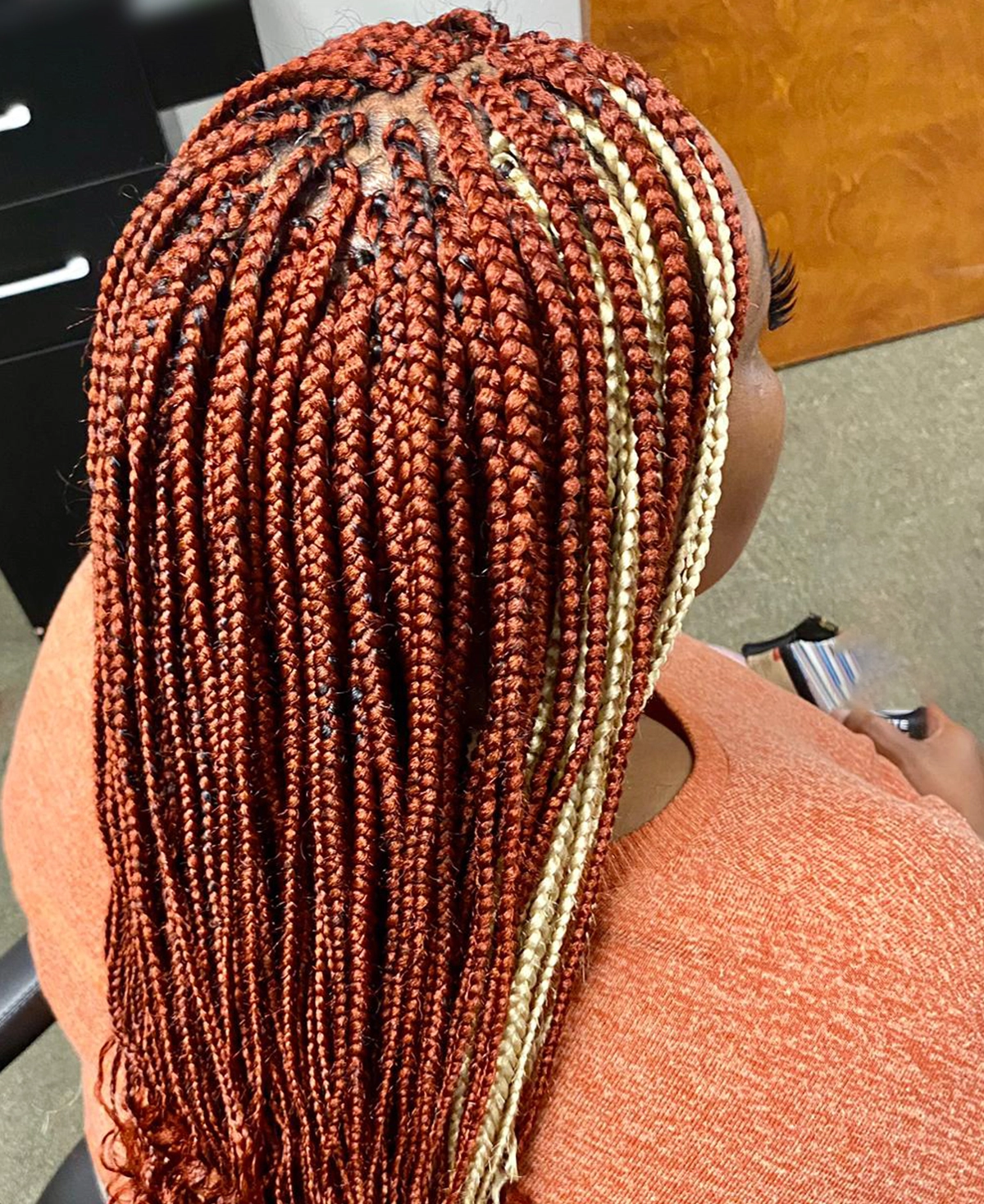
Braids are one of the best protective styles out there — but "protective" doesn't mean "no maintenance." A set that's cared for well can carry you comfortably through six weeks and come out looking almost as neat as the day you left the chair. A set that's ignored can start looking rough — and feeling worse — in half that time. The difference is almost never the braider's technique. It's what happens at home in between.
This is the routine we walk every client through before they leave the studio. It covers washing, drying, nighttime protection, your edges, and how to tell the difference between normal itch and a sign that something needs attention.
Before you keep reading
This is general guidance from working braiders, based on our own experience in the chair — it is not medical or trichological advice, and we may be wrong for your particular scalp or hair type. If you notice real pain, swelling, pus, or hair loss at any point, please stop and see a licensed dermatologist or trichologist rather than trying to wait it out. Full details in our disclaimer.
Washing without unraveling the work
The number one thing people get wrong with braid washing is treating it like washing loose hair. You don't need to scrub the braid body, and you shouldn't — that's what causes frizz, loosens the base, and shortens the life of the style. What actually needs the attention is your scalp, because that's where oil, sweat, and product buildup collect.
- Dilute your shampoo. Mix a small amount of a clarifying or sulfate-free shampoo with water in an applicator bottle with a nozzle tip. This lets you get liquid directly onto the scalp through the parts without saturating and dragging on the braid hair itself.
- Section and apply. Part your hair into four to six sections and run the nozzle along each part, working the diluted shampoo into the scalp with your fingertips — not your nails, and not a scrubbing motion. Think massaging, not scrubbing.
- Rinse thoroughly. Point the shower stream so water flows down and away from the braid body where possible, and rinse until the water runs clear. Leftover shampoo is one of the biggest causes of itch and buildup.
- Follow with a light conditioner on the scalp only, if your scalp tends to run dry, and rinse again.
Most people do fine washing every one to two weeks. If you sweat heavily from workouts or work outdoors, a light scalp rinse (even just water and a scalp-only diluted shampoo pass) every week keeps things fresher without over-handling the braids.
Dry all the way through — no exceptions
This is the step that gets skipped most, and it's the one that causes that musty, mildew-y smell nobody wants. Braided hair holds water differently than loose hair, and if you walk around with damp braids for hours (or sleep on them wet), moisture gets trapped near the scalp and inside the braid itself.
- Use a microfiber towel or an old cotton t-shirt to blot — don't rub — excess water immediately after washing.
- Sit under a hooded dryer on low-medium heat if you have access to one, or use a diffuser attachment on a blow dryer held several inches away, moving section by section.
- If air-drying at home, point a fan at your scalp and part sections open periodically so air actually reaches the roots, not just the surface.
- Give it real time — plan on at least a few hours before you consider your hair fully dry, longer for thicker or longer braids.
If your braids ever start smelling sour or musty even when you think they're dry, that's usually trapped moisture, not a sign to add more product — go back and dry more thoroughly, and consider a scalp rinse first.
"The women who get six full weeks out of a set aren't doing anything fancy — they're just consistent about drying their scalp properly and not messing with their edges every day. That's really the whole secret."
Protecting your work at night
What happens while you sleep matters almost as much as how you wash. Cotton pillowcases pull moisture out of hair and create friction that leads to frizz and flyaways at the hairline first.
- Wrap or bonnet. A satin or silk scarf, wrap, or bonnet every night protects the braids from friction and helps them keep their shape longer.
- Pineapple longer braids. Gather them loosely at the crown (like a loose, high, low-tension ponytail) rather than letting them lie flat and tangle against the pillow all night.
- Keep it loose. Whatever method you use, avoid anything that pulls tight at the hairline — a too-tight wrap overnight can create the same tension problems as a too-tight style.
Edges and hairline — the part people damage most
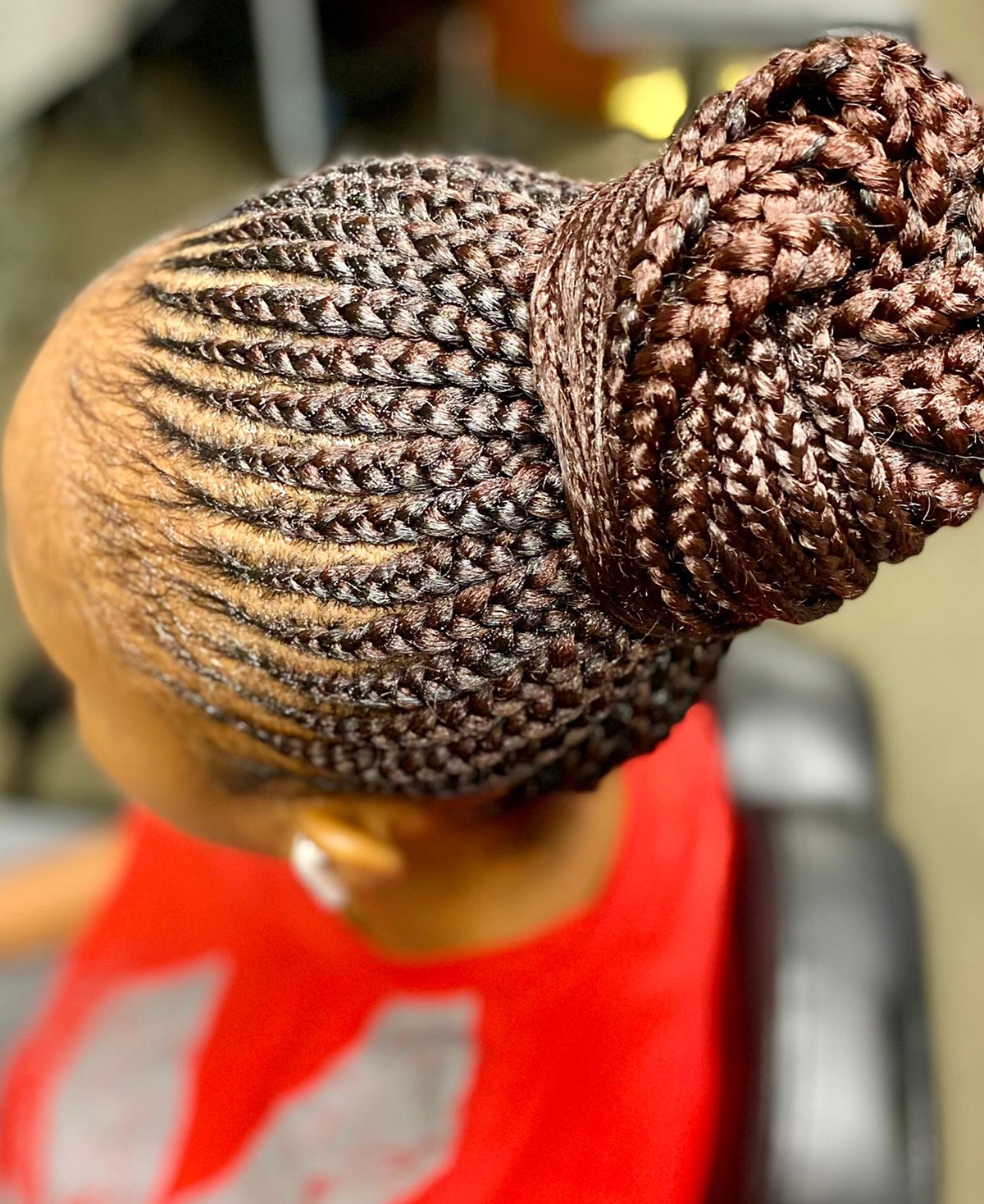
Your edges are the most fragile hair on your head, and they take the brunt of tension from any braided or pulled style. A few rules that protect them:
- Don't re-tie or re-slick your edges daily. Repeated brushing, gelling, and tying with an edge scarf every single day adds up to real friction and tension over weeks.
- Skip the heavy gel. Thick, hard-setting gels used every day can dry out the hairline and, combined with tension, contribute to breakage over time. A little edge control, applied occasionally, is fine — daily heavy application is where problems start.
- Watch for tenderness. Mild tightness for the first day or two after a fresh install is normal. Tenderness that continues, or pain when you touch your hairline a week in, is not — that's tension that needs to be addressed, not powered through.
Moisturizing the scalp without greasing the braids
There's a difference between moisturizing your scalp and greasing your braids, and mixing the two up is a common misstep. Heavy oils and butters poured over the braid body attract dust and buildup and can leave hair looking dull and weighed down rather than healthy.
Instead, apply a lightweight, water-based scalp oil or serum directly to the scalp with a nozzle applicator, focusing on dry or itchy areas rather than saturating the whole head. A little goes a long way — your scalp needs hydration, not a coating.
What causes the itching, really
Some itching in the first few days is normal — it's your scalp adjusting to tension and new product. Ongoing or worsening itch, though, usually comes down to one of these:
- Product buildup or leftover shampoo residue
- A dry scalp that needs the light moisturizing routine above, not more washing
- Sweat and oil sitting on the scalp too long between washes
- In some cases, sensitivity to the braiding hair itself or a product used during install
If a scalp rinse and light moisturizing don't settle it within a few days, or if you notice bumps, redness, or small white or yellowish beads forming at the base of individual braids near the root, that's outside normal itch — see the warning signs section below.
Managing frizz along the way
A little frizz by week three or four is completely normal and doesn't mean your braids are failing. To manage it between washes:
- Smooth flyaways with a small amount of edge mousse or a lightweight styling foam rather than a heavy gel.
- A quick dip of the braid ends in hot water can help re-seal synthetic braiding hair and reduce fraying — but this only works with heat-resistant synthetic hair, and it's a technique best done carefully or by your stylist, since the wrong water temperature or hair type can cause the ends to fuse oddly or the hair to feel stiff.
- Trim any stray frizzed pieces with small scissors rather than pulling or picking at them, which can loosen the braid.
The realistic timeline
Six to eight weeks is the general outer window we recommend for most braided styles, and we mean that as a maximum, not a target to push past. Beyond that point, new growth at the root makes braids heavier and harder to keep clean, tension increases even if you haven't touched them, and the risk of matting and buildup climbs. Plan your take-down appointment before you hit week eight, not after.
Warning signs — when to stop and take action
Most of what we've covered here is about comfort and keeping your style looking good. But there are signs that mean something more serious may be going on, and they call for taking the braids down and, in some cases, seeing a professional rather than waiting it out:
- Bumps, pimple-like sores, or pus anywhere on the scalp
- Real pain, not just tightness or tenderness — especially pain that's getting worse, not better
- Small white or yellowish balls forming at the root of individual braids (this can indicate a fungal or bacterial issue and is worth a professional look)
- Noticeable thinning or a receding hairline at the temples, which can be an early sign of traction alopecia from tension
- Persistent itching that doesn't respond to gentle washing and light moisturizing over several days
If you see any of these, take the braids down (or have your stylist take them down) and give your scalp a break. If symptoms don't clear up quickly on their own, please see a dermatologist or trichologist — catching tension-related hair loss early makes a real difference in whether it's reversible.
One more reminder
This article is general guidance based on our experience as braiders, not medical advice, and it isn't a substitute for a professional evaluation. If anything about your scalp isn't settling — pain, swelling, discoloration, or hair loss — please see a licensed dermatologist, trichologist, or physician. See our disclaimer for the full picture.
Written by the Joyce African Hair Braiding & Beauty team · Reviewed August 2026
Ask us a question
See you soon
Ready for your next style?
Tell us what you want, we'll tell you honestly what will suit you — and how long it will take.

Be the first to ask